martes, 25 de septiembre de 2012

MAGICAL TOWNS OF JALISCO


Mexico is made up of fascinating and epic historical episodes, vibrant traditions, surprising customs and delightful natural settings that, when brought together into one place, take the shape of a Pueblo Mágico, or “Magical town”, the spaces that safeguard the essence of a whole country, protected by the warmth of its people.

In these picturesque corners, tradition and culture stroll through the streets in the form of typical dishes, handicrafts, rituals, archeological sites and music, which are enjoyed with a zealously-protected everydayness. In one of these small towns or villages you can get to know first hand the architectural, cultural and artistic gems the beauty of which will help you to understand more deeply Mexican ways.

Cobbled streets, ancient churches, beautiful houses with red-tiled roofs and white walls, run-down buildings, women with embroidered skirts and shawls and men returning from their day’s work in the fields, are just some of the marvelous sights you can appreciate on your tour of one of the Pueblos that safeguard the magic of Mexico.

Practically every single state in the country boasts at least one such space in which time moves more slowly and the face of the Mexican essence remains intact, meaning you should not miss the opportunity to visit one of them and let yourself be enchanted by the soft winds and the sheltering skies.

 TEQUILA

The history of this town is closely knit to the liquor that has the same name and that is popular throughout the entire world. Tequila, the Mexican name most foreigners are familiar with. Tequila sits on the skirt of the Tequila Volcano, at nearly 10,000 feet from sea level and enjoys a warm climate year round with rain fall during summer and fall.


The dozens of distilleries are Tequilas main attraction for one can visit them and observe the process of elaboration of this spirit. There is a small museum at the Tequila Sauza distillery that shows the history of this house. Casa Cuervo has impressive installations with guided visits every day. The Hacienda San Martin of the XVII century, is one of the most beautiful Haciendas of the state and possesses grand architectural characteristics like its portal, fountains and a most beautiful chapel cupola that are a delight to see.


From the top of the majestic Tequila Volcano one can see the Tequila and Matitlan valleys and the fractured geology of the gully and an interminable horizon of agaves.


You can go up by foot, car, horse or mountain bike, depending on your taste. The path takes you through an wonderful oak forest until the famous “tetilla” remembrance of the active volcano. The winds speed wil let you know when you have reached the pinnacle and you will be in awe with the 180° views.

Fifteen minutes from Tequila in the gully a breath of humid vegetation seduces its visitors.  Going into this huge natural throat that descends between bird songs and a great variety of plants you will find the water fall Los Azules, with its pristine water and its 98 feet fall, is nothing but a great experience.


TAPALPA


Embraced by the great Sierra Madre Occidental in the state of Jalisco, is the “Land of color” among pine and oak forests, crystal clear streams and rock formations.
Tapalpa is a popular destination for tourists looking for a taste of old Mexico. This historical town is best known for its community fountains and architectural attractions like the San Antonio Parish Church, the Purisima Chapel, the Temple of Nuestra Señora de la Merced and the Temple of Nuestra Señora de Guadalupe.


The community fountains, known locally as pilas, are still used by the town’s inhabitants as a source of water and have retained their original names of De las Culebras (The Snakes'), Del Tecolote (The Owl's), Del Perro (The Dog's) and La Colorada (The Red One). At the center of the town you will find the San Antonio Parish Church, a neo-classical structure that was built out of brick by the Franciscans in 1650. What’s most impressive about the church I the precision and leveling achieved by the Franciscans while using brick as the primary building material.
Tapalpa is also the source of one of Jalisco’s most famous dishes, borrego al pastor, which is still especially famous in Tapalpa because it inhabitants continue to cook it in the traditional style. This regional specialty involves cooking a whole lamb in white wine, bay leaf, onion, garlic and peppers.

The Pueblos Magicos program identifies towns that reflect “the culture of Mexico” through attributes like architecture, traditions, customs, music, gastronomy, festivities and handcrafts. There are currently 52 destinations throughout Mexico that have earned the Pueblos Magicos classification.

MAZAMITLA
On the heights of the Sierra del Tigre, the fog creeping is Mazamitla. Place the fresh aroma of fruit trees and the open hospitality of the people seduces the visitor, who will find the true spirit of this people in its cobbled streets and whitewashed houses with tile roofs, peaceful countryside in the middle of the forest and ideal sites for the adventure. Mazamitla magical town, located south of the state of Jalisco to 122 km from the city of Guadalajara Jalisco Mexico. This beautiful mountain town, wrapped in a huge blanket of forests and streams with a fresh annual temperature of around 21 ° C, and has all the amenities to make your visit an experience to remember.


Sheltered by beautiful forests and streams, this Magic Town of the south of Jalisco is called by many as the Mexican Switzerland.


Parrish of San Cristóbal, of eclectic style with influences of the Eastern influence s, is the architectonic emblem of this municipality.


The beautiful viewpoint el Cerro del Tigre; the fresh natural environment of Jardín Encantado (Enchanted Garden) with a waterfall of 35 meters; and the beautiful forest of the Municipal Park La Zanja, are the places charming the visitors in their tour through Mazamitla.

SAN SEBASTIAN

Tucked away in the hills of the Sierra Madre lies the historic town of San Sebastián del Oeste. Founded over 400 years ago as the mining capital of New Spain, this picturesque town is a living example of colonial México.

Its attractions such as the imposing Cerro de la Bufa, its historic buildings as the Hacienda Jalisco and La Quinta, the church of San Sebastian and consistorial portal.
Just a short distance from the busy beaches of Puerto Vallarta, San Sebastián is nestled amongst the pines trees, 4600 feet up in the Sierra.
An upcoming UNESCO World Heritage Site, San Sebastián is a secluded paradise that has been preserved through the centuries.


viernes, 14 de septiembre de 2012

WHIT FLAVOR OF MEXICO... Chiles en Nogada!!


by Judy King
 
Mexico has a traditional Independence Day dish that is worthy of intense celebration. The Mexican flag colors of chiles en nogada (stuffed poblano chiles with walnut cream sauce and pomegranate seeds) make the entrée beautiful enough for fireworks and parades--but there's a lot more to this patriotically-colored entrée than meets the eye.

Not many dishes can equal the historic origin of chiles en nogada. Shortly after Mexico won its independence from Spain in 1821, Mexico's new Emperor Agustín de Iturbide unexpectedly arrived in Puebla to celebrate his September 28 birthday and the feast day of his patron saint, San Agustín, in the convent which housed the Augustinian nuns.


Just imagine the flurry of excitement in the Santa Monica convent kitchen when the shocked nuns discovered that the Emperor -- the former general who had received Spain's surrender and based the draft of the constitution on his plans for equality and freedom of religion -- was coming to dinner. Driven by the patriotic fervor sweeping the republic and a tight budget, the good sisters scurried from garden to pantries combining the colors and textures of central Mexico's seasonal foods with complex spices to create a culinary masterpiece--a work of art which transformed the colors of the new flag into sensational tastes—a dish fit to honor the Emperor of Mexico.


At dinner, the nuns presented platters of poblano chiles stuffed with picadillo (chopped meats, nuts, and fruits). The deep green chiles signified the flag's green stripe—the symbol of independence and hope.


 A creamy white sauce made from freshly harvested nogales (walnuts) represented the unity, purity and honesty of the white center section of the flag and the garnish of red pomegranate seeds embodied the patriotism and the blood of Mexico's heroes in the flag's red band.


Chiles en Nogada is a seasonal dish. It is prepared and eaten during the months of August and September, which is the time of year when the key ingredients, the pomegranates and walnuts, are in season. Chile en nogada season also coincides with Mexican Independence day festivities. Since this dish contains ingredients that are the colors of Mexico's flag - red, white, and green - it is considered a very patriotic and festive dish. If you happen to be in Mexico during Chile en Nogada season, be sure to try it.
 

Today September's favorite dish still often includes 30 or more ingredients. The carefully cooked and blended beef, pork and ham, onions, garlic and tomatoes, six or eight dried and fresh fruits mixed with a half dozen spices and herbs are stuffed into the mild chiles which, at room temperature, are topped with a sauce of blended nuts, cream, cheese, cinnamon and sherry, and sprinkled with pomegranate seeds. In the old days the dish could only be made when the prime ingredients, the just-mature walnuts, fresh pears, apples and papaya and red, ripe pomegranates were in season.


Chef Lorraine Russo explains, "The very scarcity of this dish is part of its great attraction—along with the delicate balance of contrasting temperatures, flavors and textures. When you eat really good chiles en nogada, each bite is an endless surprise." She added another suggestion for fully appreciating this special Mexican dish.


"If you want to understand the glorious intrigue and remarkable effect of this dish, take another look at Like Water for Chocolate by Laura Esquivel—either the book or the movie. Chiles en nogadas play a vital role in the unforgettable wedding feast scene. The guests are so overwhelmed with waves of passion evoked by the beauty, taste, and essence of the chiles en nogada that they abruptly leave the celebration in a fever of urgent clandestine mating. There's no question, those nuns in Puebla knew their way around a kitchen. This is surely one of the most elegant and exciting of all Mexican entrees."

Maybe a legend adds an extra dollop of sazon (seasoning and flavors) to homemade Mexican holiday dishes—especially when the recipe has a historical setting, a backdrop of Colonial buildings, and is topped off with the intrigue of a surprise visit from the new country's Emperor.


CON SABOR A PATRIA... Chiles en Nogada!!


Chiles en nogada... Un platillo lleno de tradición y libertad. En la gastronomía mundial, por su concepción, historia y sabores que se entrelazan, son la representación perfecta de lo que significa México, la concepción de este platillo guarda enormes secretos convirtiéndolo en uno de los más apreciados por nacionales y extranjeros.


Su historia nos remonta a la ciudad de Puebla, durante el siglo XIX, cuando un grupo de monjas agustinas del convento de Santa Mónica lo prepararon para rendir homenaje al general Agustín de Iturbide (después primer emperador de México) a su paso por esa ciudad, cuando regresaba de Córdoba, Veracruz después de haber firmado el tratado que puso fin en nuestro país a la guerra de independencia.


 En la creación del platillo, las monjas tomaron como referencia los colores de la bandera trigarante , motivo por el cual este colorido platillo se prepara con: chile poblano y perejil, ambos de color verde que represente la Independencia, el blanco de la nogada creada con nuez de castilla fresca y pelada a mano, que refería a la religión, y el rojo representado por las semillas de granada, que describe la unión de los mexicanos. Colores que fueron elegidos por Iturbide para su bandera y que, actualmente, se conservan con el mismo significado en la bandera mexicana.


La costumbre marca que los chiles en nogada llevan como mínimo 20 ingredientes, aunque la sofisticación del platillo refiere hoy hasta 50, dando lugar a que su preparación varíe en cada región y su elaboración ha pasado de generación en generación siendo parte de los recetarios de las abuelas y/o producto de la tradición oral; siempre conservando la base de la nogada y su adorno de semillas de granada. Los cambios más significativos están en el relleno, puesto que al ser un platillo dulce y salado, cada familia le imprime su propio toque.


Los chiles en nogada son un platillo de temporada, ya que los ingredientes sólo pueden encontrarse frescos y con el mejor aspecto y sabor en los meses de agosto y septiembre, convirtiéndose así en el platillo de las “fiestas patrias”; pueden encontrarse capeados, pero según la tradición para conservar ese misterioso sabor se deben disfrutar sin capear; es obligado servirlo al tiempo y si hablamos de la preparación tradicional, requiere de por lo menos dos días y un arduo trabajo, ya que los chiles deben ser pelados a mano, así como la nuez de castilla, la almendra y demás ingredientes picados finamente.
 
 
El secreto de esta receta se encuentra en el picadillo con el que se rellenan cada uno de los chiles, siendo éste una mezcla de carne de cerdo y res picada, con plátano, durazno, manzana, perón, pera, acitrón almendras dulces tostadas, pasas, nueces, tomate, y un sin fin de ingredientes que se recrean cada año en las cocinas, restaurantes y casas de México, para recordar cómo fue agasajado Iturbide y más que ello, para convertirse en uno de los emblemas gastronómicos nacionales.


Los Chiles en Nogada, son sin lugar a dudas uno de los platillos mas representativas de la gastronomía mexicana, deben su fama a la tradición popular que los vincula a un importante acontecimiento de la historia mexicana, y a la vez son un delicioso recordatorio de los colores de la bandera de México.


jueves, 6 de septiembre de 2012

ORIGINS... PUERTO VALLARTA!!


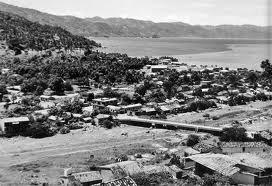
 During the first part of the 19th century, at the mouth of the Cuale River  between the rugged sierra, the ocean and the powerful Ameca River, remained isolated from the rest of the world.
 
The hubs of economic activity were up in the mountains, in the towns of Cuale, San Sebastián and Mascota, where silver mines abounded but where salt, an essential element for the metal processing, wasn't found, we'll return to that further on.


Puerto Vallarta is located on the Pacific Coast on one of the largest bays in the world (member of "The Most Beautiful Bays in the World Club". Banderas Bay measures 42 kilometers from north to south. The northernmost limit of the bay is at Punta Mita which is the end of the Sierra de Vallejo mountains and, to the south, the bay ends in Cabo Corrientes, part of the foothills of the Sierra del Cuale range.


During the XVI Century, safe harbors all along the Pacific Coast were a vital necessity so that ships returning from the Philippines would have a place to find refuge in case of attack by pirates.These harbors were also necessary during the long journeys, to and from the Orient so that ships could be repaired if necessary and crews could take on provisions. It is known that a shipyard was built on the bay in 1644 (probably where Mismaloya is located today) and two ships were built for Bernardo Bernal de Pinadero that would be used in the colonization of Lower California.
 
 
In the XIX Century, the site that is today Puerto Vallarta was used for the loading and unloading of supplies and materials for the mining companies that worked the mines in Cuale and San Sebastian. At that time the site was known as Las Peñas.


In 1851, Don Guadalupe Sánchez Torres, originally from Cihuatlán, Jalisco, began to make regular deliveries of salt from San Blas or the Marías Islands in his small boat since the mines required large quantities for refining the silver. Don Guadalupe and his men built a small lean-to from tree trunks and palm leaves so that they would have a place to rest that was out of the sun while the sale was being loaded onto donkeys for transport to the mines. Towards the end of 1851, Don Guadalupe decided to bring his family to Las Peñas de Santa Maria de Guadalupe. With the arrival of new families, the village grew bit by bit and its economy began to change. While some families brought in salt, others began to devote themselves to agriculture or cattle raising.
 
 
In 1880, Las Peñas had a population of 1,500 inhabitants. New families from Cuale and San Sebastian came to settle in the port. Five years later, on July 14, 1885, the port was opened to national maritime traffic and officially given the name of Las Peñas. On the 23rd of July, a Maritime Customs Office was established. The following year on October 31, 1886 the town was given official political and judicial standing when decree No. 210 was passed by the State Congress. During the last decade of the XIX Century and the first of XX Century, Las Peñas gradually progressed thanks to the combined efforts of the people and the enthusiasm of Don Guadalupe.
 
In March 1914, the first post office was opened and in September of the same year a telegraph was installed.
On May 31, 1918Las Peñas was granted the title of municipality as well as a new name: Puerto Vallarta, in memory of the illustrious lawyer and Governor of Jalisco, Don Ignacio L. Vallarta.


In 1925 when the Montgomery Fruit Company purchased about 70,000 acres in near-by Ixtapa, Vallarta began to boom due to the surplus of jobs available on the newly-opened banana plantations. They also built a railway to transport the bananas from Ixtapa to El Salado estuary where they were loaded onto ships to carry them to the United States. This operation ended in 1935 when the Montgomery Fruit Company had to leave Mexico because of the new agrarian law that had just come into effect. Other products were raised in the area such as corn, beans, tobacco and small coconuts used for their oil, were shipped to the interior to be used in the national market.


In about 1930, a few national and foreign tourist began to come o Puerto Vallarta, returning year after year, to spend their vacation enjoying the tranquility and great natural beauty of the port. Slowly word began to spread and each year more tourists came.


In 1951, hundred years after it's foundation, Puerto Vallarta celebrates in earnest.  Mexican president Miguel Alemán ensured the splendor of the festivities. From who-knows-where, three ships arrived in the bay to salute the town with a 21-gun salute. In addition three planes landed in Los Muertos, packed with reporters and cameramen. A relic of the True Cross was brought to Vallarta as well on this occasion.


On November 11, 1954, Mexicana de Aviación airline inaugurated its flight Guadalajara - Puerto Vallarta. Mexicana found in Puerto Vallarta a destination to compete with the famous bay of Acapulco,  Guerrero. Visitors started coming in from other Mexican towns and from abroad.


Guillermo Wulff's arrival - coincidentially as a guest in Mexicana's first flight to Vallarta - marks the beginning of the second phase in the material construction of the town. It was he who introduced the cupola as an architectural element in several homes he built between Gringo Gulch and Mismaloya, where he obtained a very timely 90 year lease.


Jhon Houston met a Puerto Vallarta architect and entrepreneur named Guillermo Wulff In Los Angeles he was thinking about locations for Iguana, and Guillermo urged him to go to Mismaloya. Mismaloya was Indian land, Wulff said he had a lease on it and could build anything he wanted there. (Huston, 1980. An Open Book)
With its wide beach and tropical forest as background for the only set (the old hotel) expressly built for the movie, the site was perfect, and a few months later it was ready for the first call for "action". Filming was not exactly a picnic, though. Gabriel Figueroa, the great Mexican photographer, had a specially hard time getting and installing lighting equipment and power plants in the jungle with the ocean as the only access. It was the year 1963.
 
 
For the first time, Puerto Vallarta received simultaneously big Hollywood stars, national celebrities and USA intellectuals. Deborah Kerr, Ava Gardner, Sue Lyon and Richard Burton led the cast, that also included Emilio "El Indio" Fernández. Tennessee Williams, author of The Night of the Iguana, visited the set frequently and always in the company of Gigi, his beloved poodle, who, according to John Huston, often suffered from sunstroke.


On the other hand, Liz Taylor, sometimes accompanied by her tow children, spent most the time with Burton, whom she was deeply in love with. Charmed by Puerto Vallarta's magic, Richard and Elizabeth purchased a house, Casa Kimberley, and became the center of a fairly large group, that, according to those close to them, certainly enjoyed themselves. John Huston built his house in the small cove of Caletas where he lived until his death.
 
This extraordinary gathering of celebrities, captive in an out-of-the-way spot, was too tempting for the international press that soon began arriving in hordes. In addition to the gossip about the famous stars, the media showed the primeval beauty of the place. From that moment on, Puerto Vallarta ceased to be "a secret hide-away waiting to be discovered".
 
In the face of the growing demands of tourism, the need for an adecuate response from authorities and investors became urgent, and the governor of Jalisco from 1965 - 1971, Francisco Medina Ascencio, was there to promote the change. Through his efforts Puerto Vallarta was outfitted with the infrastructure required of an urban development and a modern tourist destination. His efforts and needs reached the Mexican President and thus, Puerto Vallarta ascended to the category of city on May 31st, 1968, and was granted funds to build a bridge over the Ameca river, the coastal highway from Barra Navidad to Puerto Vallarta, the Compostela - Las Varas - Puerto Vallarta road and the international Puerto Vallarta airport named after the president: Gustavo Díaz Ordaz.


During Medina Ascencio's government the Camino Real hotel and the Banco Nacional de México (Banamex) branch were built. Thanks to his influence, the city soon enjoyed electric power and telephone service. In addition, the first harbor in Jalisco was built at El Salado. One of Medina Ascencio's great achievements was getting the presidents of USA and Mexico to meet in the recently appointed city. He knew this would give more international exposure to the city. Out of all this promotional activity, the President gave Air France the concession for a flight Paris - Montreal - Guadalajara - Puerto Vallarta, thus attracting European tourism.
 
In 1970, the President signed a decree declaring "residential and tourist development on the lands surrounding Bandera's Bay in the states of Nayarit and Jalisco as well as existing communities" of public convenience. Motivated by this, the president expropriated 1026 hectares, which in 1973, would finally be regulated through the founding of the Puerto Vallarta Trust. The city chronicler, don Carlos Munguía Fregoso, considers these two steps as instrumental in the building of Puerto Vallarta, paving the way for new and significant investments. It was only after 1973 that the construction of big hotels began.


Two years after the opening of the Sheraton Buganvilias Hotel in 1980, at the end of President José López Portillo's term, the Mexican peso was devalued. Yet one man's trash is another man's gold, goes the proverb; and while the rest of the country suffered, Puerto Vallarta enjoyed a period of prosperity, some say, as yet unsurpassed. "The year 1983 was specially good," says don Carlos. With their budget suddenly doubled, foreign visitors filled the restaurants and stood in long lines in front of the shops that could hardly keep up with their clients' demands. The key to this blissful boom was keeping the prices in pesos.
Between 1980 and 1990 Puerto Vallarta's population nearly doubled from 57,000 to 112,000 citizens. By 1985 the flux of tourism and immigrants demanded, on one hand, the building of new hotels and, on the other, the development of residential options for its employees and executives. Downtown Puerto Vallarta wasn't large enough to house this expansion and nobody wanted to see tall buildings obstructing the view of the bay or destroying the city's typical Mexican-village atmosphere.


With great timing, the Martínez Güitrón brothers from Guadalajara started building Marina Vallarta. Impeccably planned, the development would eventually include a school, condominiums, residential site, a shopping mall and large hotel properties. Work on the Marina proper, with its 450 boat slips, was started in 1986 and by 1990 the Marina was in full swing. The project was basically finished by 1993, ahead of schedule.
The first years of the nineties were hard for Puerto Vallarta. Even though the national tourism grew, international travelers dropped off. In 1993 the destination was fifth in Mexican vacationers' list of beach resorts, after Cancun, Acapulco, Mazatlan and Veracruz. It was crucial to put an end to this decline.
 In contrast with Cancun, Ixtapa or Huatulco - government planned resort destinations - Puerto Vallarta is somewhat of an accidental resort town.
Nobody set out to put Puerto Vallarta on the tourist map, at least not in the early years. But today the primitive charms of yore have been substituted with million-dollar investments and fierce competition. The globe is shrinking, and traveling to places once inaccesible due to distances, is now common practice.
Even though Puerto Vallarta is today measured up against Bali, New Zealand or Ibiza, it still holds its own. The natural beauty of Banderas Bay, with its deep waters (eitehr warm or cool, depending on the season), immensely rich biodiversity. Lagoons and wetland birds can be watched year round, while right in the bay, whales and dolphins frolic. There's fish to be made into ceviche or grilled on a stick; billfish worthy of international tournaments and colorful fish to be admired diving below the bay's surface. In the foothills, the tropical forest welcomes bikers, horseback riders and mountain bikers. Crossing the streams and cooling down in the pools formed by their waterfalls, explorers learn to tell fig trees from parotas and amapas. On the beaches at night, sea turtles lay their eggs during the summer months. Banderas Bay is definitely a marvel and a strong attractive for tourism.


Today, Puerto Vallarta occupies an important position among the rest of the world’s international tourist resorts.